
Hardshell or softshell jacket: choosing the best protection for your outdoor activities
Choosing the right jacket for your outdoor adventures is essential to staying comfortable and protected.
In this article, we’ll explore the differences between a hardshell jacket and a softshell jacket.
Understanding their characteristics, advantages and disadvantages will enable you to make an informed choice according to your specific needs.
Hardshell jacket features
A hardshell jacket is designed to offer excellent protection against the elements.
Primarily used in extreme conditions, they are known for being waterproof and water-repellent.
In concrete terms, a hardshell jacket prevents water penetration, while allowing perspiration to evaporate, thus ensuring effective thermal regulation.
One of the main assets of a hardshell jacket is its waterproof-breathability.
The materials used in their manufacture, such as Gore-Tex, repel water while being sufficiently breathable to prevent moisture build-up inside.
This makes them an excellent choice for intense activities such as hiking in the rain orclimbing in wet conditions.
Avantages des vestes Hardshell
Pourquoi opter pour une veste Hardshell ? Voici quelques points forts : Protection contre les intempéries : Elles sont conçues pour résister aux conditions météorologiques sévères. Durabilité : Les vestes hardshells sont robustes et résistantes à l'usure. Polyvalence : Idéales pour divers sports de montagne et activités de plein air nécessitant une protection maximale.
Inconvénients des vestes Hardshell
Toutefois, les vestes Hardshell présentent aussi quelques limitations : Poids et encombrement : Elles peuvent être plus lourdes et volumineuses comparées aux autres types de vestes. Confort limité : Moins souples que les vestes Softshells, elles offrent moins de liberté de mouvement.
La veste Hardshell en bref...
La veste Hardshell est composée d'une membrane protectrice prise entre une doublure intérieure et un tissu extérieur. Elle existe en trois versions : 2, 2,5 ou 3 couches, selon la construction. Conçu pour vous protéger de la pluie et du vent, elle n'apporte pas de chaleur. Pour affronter le froid, elle s'utilise en combinaison avec une couche isolante en dessous (comme une polaire ou une doudoune) et une couche respirante en première couche.
Softshell jacket features
The softshell jacket is distinguished by its flexibility and comfort.
It is particularly suited to activities where mobility and breathability are crucial.
Unlike the hardshell jacket, it is not entirely waterproof, but rather water-repellent, meaning that it repels water up to a certain point without completely preventing moisture from passing through.
Softshell jackets are generally made from soft, stretch fabrics, offering greater freedom of movement.
They provide an excellent source of warmth thanks to their fleece or insulating lining, making them ideal for activities in cold, dry weather.
Avantages des vestes softshell
Voici pourquoi une veste softshell pourrait convenir à vos besoins : Confort et flexibilité : Leur matériau élastique permet une grande liberté de mouvement. Respirabilité : Excellentes pour évacuer la transpiration lors d'activités physiques intenses. Source de chaleur : Parfaites en conditions fraîches et sèches grâce à leur capacité isolante.

Inconvénients des vestes softshell
Cependant, les vestes softshell présentent aussi certains désavantages : Résistance limitée aux intempéries : Moins efficaces contre la pluie intense et le vent fort comparées aux vestes hardshell. Moins protectrices : Ne conviennent pas aux conditions météorologiques extrêmes.
La Softshell en bref...
La softshell est donc idéale pour des activités intenses par temps frais, où la légèreté et la liberté de mouvement sont prioritaires. Son isolation thermique, combinée à ses propriétés coupé-vent, la rend adaptée aux conditions variables, mais elle est moins efficace en cas de pluie prolongée.
When should you choose a hardshell jacket?
The decision to opt for a hardshell jacket should depend primarily on the conditions exposed and the type of activity practiced.
Times when such a jacket becomes indispensable include :
- Hiking in the rain: when waterproof protection is crucial to avoid hypothermia.
- Climbing in damp conditions: Excessive humidity requires this type of protective equipment.
- Unpredictable weather: To ensure your safety and comfort in the face of sudden weather changes.
In short, any activity likely to be influenced by severe weather will benefit greatly from the use of a hardshell jacket.
By investing in a sturdy, reliable jacket, you ensure optimum protection against the elements.
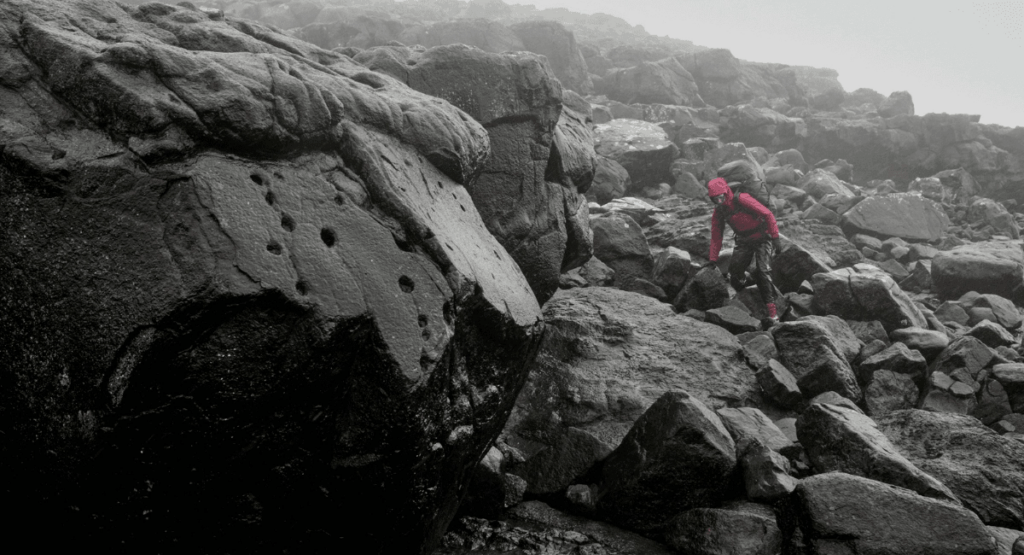
When should you choose a softshell jacket?
Opt for a softshell jacket if your priorities are more focused on comfort, flexibility and breathability.
Here are just a few examples of situations where softshell jackets excel:
- Highly mobile activities: Perfect for trail running, mountain biking or light hiking.
- Mild weather: Suitable for dry days with cool temperatures.
- Strategic underlay: Used as a mid-layer under a hardshell jacket during prolonged outdoor exposure.
Ultimately, the softshell jacket is better suited to the demands of dynamic outings and conditions that don’t require ultimate protection against the elements.
Some criteria to consider before buying
When choosing between a hardshell and a softshell jacket, there are a number of essential criteria to ensure a perfect fit for your needs.
Here are some key considerations:
Weather conditions
Evaluate the climate of your regular destinations.
If these are known for frequent precipitation or strong winds, a hardshell jacket will generally be the best option.
On the other hand, for cool, dry environments, a softshell jacket will be more than sufficient.
Type of activity
Your selection will also depend on the intensity of the activity.
A more active adventure requiring a lot of movement will benefit from the flexibility of softshell jackets, while static activities under rigorous conditions will fully justify the use of hardshell jackets.
Budget
Budget can also play a decisive role in your choice.
Often more expensive due to their advanced materials, hardshell jackets represent a significant but often necessary investment for enhanced protection.
By comparison, softshell jackets offer versatility at a potentially lower cost.
Practical tips to get the most out of your jacket
To make the most of your investment, here are a few tips on how to get the most out of your jacket:
Regular maintenance
Maintain your jacket’s waterproofing properties on a regular basis. waterproof and breathable properties.
Follow the manufacturer’s recommendations for washing and drying to avoid damaging the technical membranes.
Layering
Adopt a layering strategy to adjust your equipment according to conditions.
Wear a softshell jacket under a hardshell in demanding situations, or use only a softshell for light and moderate activities.
See also our advice page Winter dressing guide
Customized adjustments
Take advantage of adjustable features such as hoods, cuffs and hems for optimum protection and comfort.
Make sure your jacket offers adjustments to suit your personal preferences and body shape.
In conclusion, whether you choose a hardshell or softshell jacket, the key is to base your decision on your specific needs in terms of protection, comfort and functionality.
Each of these jackets has its own advantages and disadvantages, but both can greatly enhance your outdoor experience when used judiciously.
ALSO IN OUR ADVICE PAGES


